
Summer Interior Damage
June starts quietly.
You park in an outdoor lot, go inside for a few hours, come back to a car that’s uncomfortably hot. You run the AC, everything cools down, and you go about your day. Nothing looks different. Nothing feels obviously wrong. The damage happening inside your car’s materials is invisible—molecular-level breakdown in plastics and leather that won’t show up for weeks.
That’s the thing about what summer does to an unprotected interior. It’s not dramatic. It’s gradual. And by the time you notice it, you’re already looking at consequences that can’t be reversed.
Here’s what actually happens, month by month.
June: The Invisible Start
The first full month of summer heat is doing its most important work in total silence.
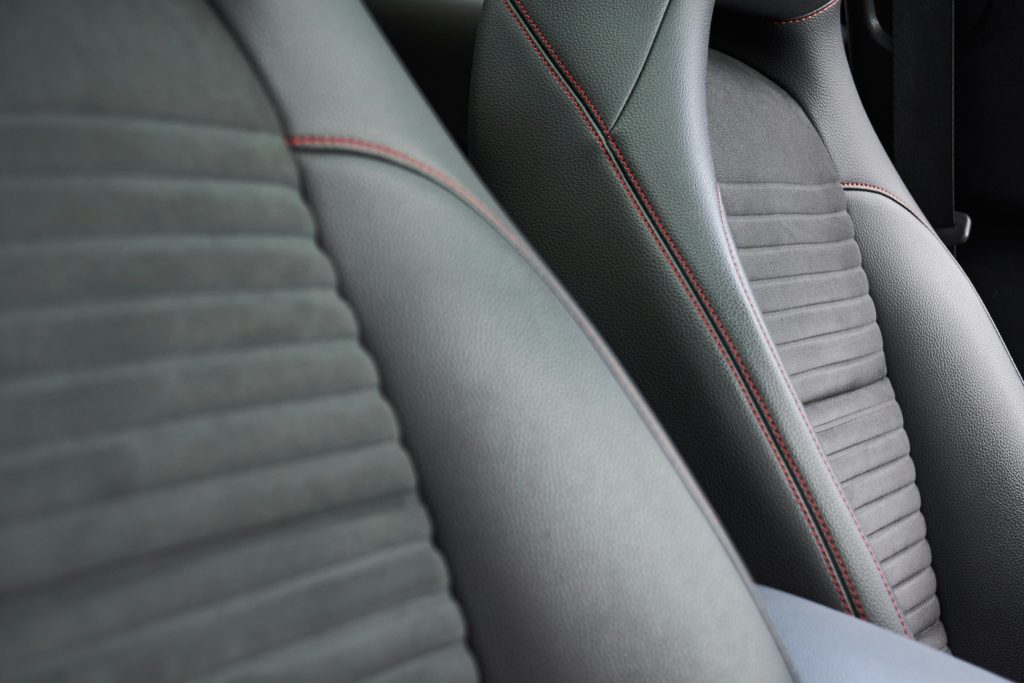
Dashboards are taking the worst of it. The windshield sits at an angle that channels direct sun onto the dashboard surface for most of the day, and the plastic and vinyl materials there are absorbing both UV radiation and infrared heat simultaneously. Direct UV exposure breaks down the color, texture, and structure of leather, vinyl, fabric, and plastic. Over time, that heat fades finishes, dries out surfaces, and leaves dashboards and seats looking brittle. Chemical Guys
In June, none of that is visible yet. But the chemistry is underway. UV radiation is breaking chemical bonds in the dyes and polymers that give your dashboard its color and flexibility. Interior temperatures on clear June days are already reaching 130-150°F in a parked vehicle, and at those temperatures, the plasticizers that keep plastic components flexible begin slowly evaporating.
UV exposure is responsible for 40-50% of car interior fading, with vehicles left in direct sunlight experiencing up to 60% faster fading.
You can’t see any of this in June. Run your hand across your dashboard right now and it feels normal. That’s the problem with June damage—it feels like nothing is happening, so nothing gets done about it.
The leather seats are starting their own process. Leather stays supple because of natural oils in the hide, and UV exposure combined with heat begins driving those oils out. Seats take longer to show damage, but they are still drying out and fading quietly with every sunny drive and outdoor parking session.
July: The Accumulation
July is where the damage from June stops being chemistry and starts becoming physics.
The materials that spent June losing flexibility and losing dye bonds are now being stressed repeatedly by thermal cycling—expanding in heat during the day, contracting slightly in the air-conditioned car during driving, expanding again the next afternoon in the parking lot. Each cycle works microscopic stress into the surfaces that were already weakened in June.
Dashboard surface temperatures on a clear July afternoon in a parked vehicle routinely exceed 160-170°F. A parked car in direct sunlight can reach temperatures of 130°F or higher, causing dashboard materials to deteriorate faster. At sustained temperatures in that range, the process that started invisibly in June accelerates significantly. Malibu Car Wash
By mid-July, if you look carefully in direct sunlight, you might notice the first signs. The top surface of your dashboard—the part closest to the windshield, getting the most direct exposure—may look very slightly different in color or texture from areas that stay in shadow. It’s subtle. Easy to dismiss as a trick of the light.
It isn’t.
The leather seats are now noticeably drier to the touch compared to how they felt in May. Not cracked—not yet—but the surface has lost its original suppleness. Leather seats dry out and crack without moisture and natural oils. Intense heat also causes interior panels to warp, while plastics become brittle and discolored.
Fabric seats are doing the same thing more slowly. The colors on the top surfaces of seat cushions—the parts taking direct sun—are beginning to separate from the colors on the sides and backs that don’t get direct exposure. You probably won’t notice this in July. You will in September.
Steering wheel surfaces, particularly leather-wrapped ones, are showing the same drying that’s happening to the seats. The portion of the wheel that catches afternoon light through the driver’s window is aging faster than the parts in shadow. The difference becomes tactile—one section slightly rougher or stiffer than another.
August: When It Becomes Visible
August is when people call us.
Not because anything dramatic happened overnight. Because the accumulation from June and July has crossed a threshold where it’s now visible without looking for it. The dashboard color differential between sun-exposed and shaded areas is obvious in natural light. The leather has developed areas where pressing and releasing doesn’t spring back the way it used to. In some vehicles, the first hairline cracks have appeared on the dashboard surface near the windshield edge, where exposure has been most intense.
By the end of summer, you may start noticing a few telltale signs that your vehicle has had one too many days under the sun. Dashboards that are sticky to the touch, or seats that feel brittle are all warning signs. It’s easy to dismiss them as cosmetic, but once surfaces start breaking down, the damage spreads faster than you’d think.
The sticky dashboard is worth naming specifically because it surprises people. It doesn’t seem like heat damage—it seems like something spilled. But what’s actually happening is that the plasticizers that have been slowly evaporating out of the plastic all summer are coming to the surface as a residue. It means the plastic is losing what keeps it flexible. The stickiness is a symptom of material breakdown, not dirt.
Seat fabric discoloration is now obvious on vehicles where the pattern of sun exposure has been consistent all summer. The seat back near a window might be two clearly distinct shades of the same color—the original below the seat line, a faded version above it. The color difference makes the car look significantly older than it is.
None of this is reversible. This is what distinguishes UV and heat damage from, say, a spill or a scratch. A spill can be cleaned. A scratch can sometimes be buffed. Faded dyes don’t unfade. Cracked plastic doesn’t reheal. Leather that’s lost its oils and developed surface cracks can be conditioned and slowed down, but the original surface texture doesn’t return.
What Three Months Actually Cost
The conversation at trade-in is usually where this becomes concrete.
A dealer appraising a three-year-old vehicle with three summers of unprotected interior wear is looking at the same things described above—dashboard discoloration, seat fading, leather dryness, possible cracking near the windshield. A sun-damaged interior can knock down your car’s resale value big time.
The specific dollar impact varies by vehicle and market, but interior condition consistently affects trade-in offers. Dealers price deterioration in, and they’re not wrong to—replacing a damaged dashboard or reupholstering front seats is real money that gets subtracted from the offer.
The other conversation is proactive replacement. A dashboard that’s cracked across the top surface near the windshield on a mid-range vehicle costs $1,500-3,500 to replace depending on complexity and labor. Two front seats needing reupholstery due to leather failure can run $1,600-4,000. These aren’t hypothetical numbers—they’re what shops quote for the specific repairs that summer damage eventually necessitates.
Quality window film costs $500-800 installed on most vehicles. It blocks 99% of UV radiation and rejects 50-80% of total solar energy depending on film type, which means the chain of events described above—June’s invisible chemistry, July’s accumulation, August’s visible damage—largely doesn’t happen to a protected interior.
The timing matters too. Installing tint in August stops the damage from getting worse through the rest of summer and eliminates next summer’s accumulation entirely. The vehicle that gets tinted in August 2026 goes into summer 2027 with a protected interior that doesn’t pick up where August 2026 left off.
The vehicle that doesn’t get tinted in August 2026 picks up in June 2027 exactly where August 2026 ended—and the process described above runs again, from a starting point that’s already more degraded than where June 2026 began.
Damage compounds. Protection stops the compounding.
Want to learn more? Contact Us.